

ACCESSIBILITY ISN’T EASY MODE
If you have happened to upon my introductory piece, you’ll know that I have been disabled since I was 17 years old, meaning much of my life has been spent looking for accessible friendly avenues into my dream worlds.
What is access? It seems to be more of a buzz word for people to market things these days but what does it actually mean? Let’s start as if we’re teaching Tom DeLonge’s aliens who have no idea.
Being disabled does NOT always mean using a wheelchair, being unable to work or having a condition that is immediately visible. Disability can affect mobility, energy, pain, vision, hearing, processing, coordination, communication, concentration, sensory tolerance and countless parts of everyday life.
Access means making sure disabled people are included and be able take part, with the same basic opportunity as able-bodied people. That CAN include the things we immediately think of; physically getting into a building but it can also mean a whole variety of other things; being able to read communication, hear dialogue, understand instructions, use controls, sit down when needed, avoid sensory triggers or participate without being pushed beyond what your body has capacity for and can manage.
For the able-bodied, a lot of these things are invisible and go un noticed in their experiences of life as the world has largely been designed with them in mind, around what you can already do. A staircase is a staircase, standing in a queue is just waiting, tiny text is just annoying, I think we can all agree on that however!
For disabled people, that is where the proverbial door is shut and participation let alone enjoyment and integration, is not feasible, down comes the invisible shield on the metaphorical portal and we are left outside, wondering what cool activities we’re missing out on.
We don’t need an advantage, we’re asking for what can feel like a very physical barrier to be removed so that we can participate, integrate and enjoy with where and what we choose too! We aren’t asking for the boss to have half its health or for the gig to be half as loud, it’s asking for the obstacle between us and the experiences to be removed.
INSIDE THE FEEDBACK LOOP
Despite being predominantly housebound for 20 years, I took my passions online and started playing the galactic RPG, Bungie’s Destiny 2, to escape from my rather doom and gloom real world. I began tweeting online about how certain aspects of the game felt for me, the good, the bad, the downright ugly. It didn’t take long for Bungie’s dungeons and raids team (my favourite places as I felt I could finally achieve something AND help others through difficult content at the same time) to LITERALLY slide into my DM to ask me all about my experiences.
Feeding back on access took me through much of the game from my favourite raids like Vow of the Disciple to my weakest PVP moments! Little things, barely noticed by other players; lighting and how it hit the ledges on already annoying jump sections to not having to repeatedly press the trigger to shoot back at my opponents when my wrists felt weak and sore, the game introducing an auto-shoot feature on all weapons. It was in explaining WHY these things were helpful that really became the theme of my dev conversations. It made me feel hopeful and when these things were improved or became in game options, I felt really listened to and seen AS A WHOLE PERSON.
I think the lack of inclusion in player-testing can make disabled people like myself feel really dismissed and left out. Even if these adaptations take place without fanfare and creep in via patches and hotfixes, this feedback loop, for me, can create so many WINS for everyone! Auto-shoot has become widely used by the general population, toggled on without people really acknowledging it as an accessibility option!
The portal opened because they were listening. Developers don’t need to know everything about disability; they need to start conversations with people who actually encounter these barriers.
WHAT’S THE GIG EQUIVALENT?
Trading the controller for gig tickets, what does that look like? We can all agree that physical access is a priority and up there in demands. Can someone actually get through the door? Is there step-free entry? Is there an accessible toilet? Is there somewhere to sit with a clear view of the stage? Can I/or my carer park close enough before we even get through the door?
Access starts way before this. Sometimes the barrier is even buying the ticket at all! Accessible booking often runs separately from general sale. Finding WHO to contact and in which method is often a hurdle too high in itself. Do I need to get someone to phone for me, do I need to email or register myself somewhere? What evidence of being disabled does the venue require? Some schemes even require disabled people to PAY for an access card or proof… how is this fair? Will there be any accessible tickets LEFT after all of this? While everyone else is refreshing Ticketmaster with reckless abandon, eventually booking and purchasing in a few clicks… I’m sat wondering whether the very small accessible ticket line (if you are even ABLE make the call) will even be answered, many aren’t 24/7 and whether they’ll reply to my e-mail before the concert is sold out! For most people, buying a ticket is the start of the excitment. For disabled people, it can be start of feeling pushed out.
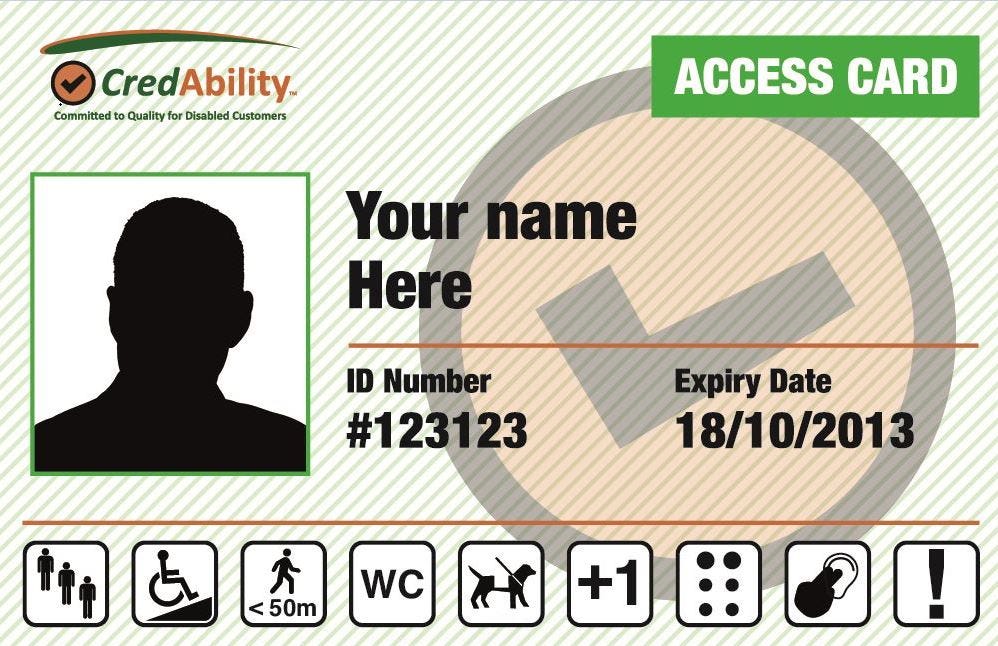
This anxiety can often make it feel easier to just buy a standard ticket and deal with the consequences later, even when you know standing, queuing or getting to and around the venue is going to hurt and wear you out. I can’t tell you how much money I’ve wasted, gigs I’ve cancelled just because this was too overwhelming to imagine let alone do. Accessibility shouldn’t mean being diverted to a parallel universe with more admin, more uncertainty and more chances to miss out. Build access into the main experience, not a seperate menu nobody can find.
There are really valuable provisions; companion/carer tickets can make gigs possible for people who couldn’t safely attend alone, this IS worth praising, but even a good adjustment loses some of its value if accessing it is confusing, inconsistent or stressful.
If we’ve fought these metaphorical mobs and are actually able to get to the venue, what’s next on the list of debuffs? Can we stand in a queue for an hour before doors? Even with access entry points, there is often still a wait. Can we manage the walk from the nearest accessible car park? Sometimes you have to book these Blue Badge spaces in advance without realising until you get there. Can we leave and come back in to take medication or have a sensory break? Can we find out in advance if there will be strobes/pyrotechnics or other intense effects? Can we even see the stage? Accessible seating isn’t always in a particularly sought after area of the venue.
For someone, like me, with; chronic pain, limited energy, sensory issues and an invisible disability, these things can be reasons these events are inaccessible. The show itself might be manageable but everything around it can make you wonder if it’s really worth it when it feels so impossible.
This is where my gaming comparison because useful…
We’ve talked about how in gaming we don’t need to REMOVE its hardest encounter because someone has different needs. A gig doesn’t need to be quieter or calmer, that’s part of the reason we go, for the atmosphere and loud music, our acts don’t need to be less intense on stage just because we need to sit down, avoid a long queue or enter through a different door!
The experience is why we WANT to go, the route into it should be flexible enough that we CAN ALL go.
ACCESS SHOULD BE BUILT IN
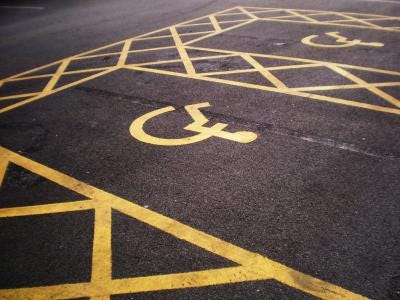
Accessibility works best when it’s the metaphorical “main game” not an optional “addon” or “hotfix” when somebody points out that a group of people have been excluded.
One of the biggest things I took away from giving accessibility feedback to game developers was; no one needs to read/write an Encyclopedia on disabilities to be qualified to make helpful changes to access. What matters is creating a space for disabled people to be part of the conversation early enough that their experiences can really shape the end result.
Music could benefit HUGELY from the same approach.
Accessible ticketing shouldn’t feel like an obstacle course, sectioned off like cattle from the main lane of booking. Venue information should be clear and not take Sherlock Holmes AND Watson to find, often taking multiple attempts to uncover in full. Seating, queueing alternatives, parking and companion access should not feel like special exceptions that have to be negotiated individually every time.
They should be PART of how the event is planned to begin with.
It doesn’t mean changing what makes live music exhilarating, we don’t need rockstars to turn down their guitars and whisper… we are purely asking for more ways to reach the same experience.
Gaming has definitely shown me that you can preserve difficulty, identity and atmosphere while still giving people different ways to participate. Accessibility DOES NOT dilute an experience by making it more inclusive.
If anything it allows more people to experience it EXACTLY as it was intended.
The boss can stay difficult. The breakdown can still be brutal.
Access should NOT be either.
PLAYER TWO: What’s one barrier in game or live music that able-bodied people probably never have to think about but can completely change the experience for you?
This is a very interesting topic! Id love to hear your thoughts on what souls likes could do for accessibility in that regard, because they are excessively brutal a lot of the time and I feel the accessibility of them is a serious challenge which frankly, they've just not bothered with for the most part in that sort of game.